Guides
Running a CPAP Off Grid in an RV
Researched from published standards and manufacturer specifications. Updated .
Quick answer
A CPAP machine is a small load compared to air conditioning or a residential fridge, but it runs every single night without exception for many users, which makes it worth sizing correctly rather than assuming it is too small to matter. The humidifier and heated hose are the whole story here: a CPAP alone draws a modest 40 watts, but adding heated humidification can more than double that draw, and whether that power comes through an inverter or straight off the battery as 12V DC changes the real nightly amp-hour cost meaningfully.
This guide covers the real running watts with and without a heated humidifier, why running a CPAP on 12V DC directly is the single biggest power-saving choice available, real nightly amp-hour figures for two, three and four nights, and what to confirm with your equipment supplier before relying on any off-grid setup, since a CPAP is a medical device for many of the people who depend on one.
How much power does a CPAP actually use?
These are typical published draw ranges. Individual CPAP models and humidifier settings vary, so check your own machine's nameplate or manual.
| Configuration | Running watts |
|---|---|
| CPAP, no humidifier | 40 |
| CPAP with heated humidifier | 90 |
Convention Source: Typical manufacturer nameplate ranges compiled per appliance category; individual models vary, so confirm against the nameplate or manual for your own machine.. The heated humidifier and hose, not the CPAP blower itself, account for most of the added draw.
Why does running a CPAP on 12V DC directly matter so much?
Many CPAP machines accept 12V DC power directly through a manufacturer DC power cord, which skips the inverter entirely. That avoids two separate losses at once: the inverter's own conversion inefficiency, commonly around 15 percent, and the inverter's continuous idle draw, its consumption just to stay switched on, which runs for the entire time the CPAP might be used overnight regardless of the machine's own draw. Running on DC directly is the single largest power-saving decision available for a CPAP setup, larger than any difference between individual CPAP models. Check your specific machine's manual for whether its heated humidifier plate also supports 12V DC, since some humidifier heaters require AC power even when the CPAP blower itself runs on DC.
How many amp-hours does a CPAP use over several nights?
These figures assume an eight hour night, run through an 85 percent efficient inverter, which is the higher-draw path. Running on direct 12V DC where the machine supports it uses less, since it skips the inverter's conversion loss and idle draw entirely; for the no-humidifier configuration that direct-DC figure is roughly 26 amp-hours a night rather than 31.
| Configuration | Amp-hours per night | Bank for 2 nights | Bank for 3 nights | Bank for 4 nights |
|---|---|---|---|---|
| No humidifier | 31 | 78 | 117 | 156 |
| With heated humidifier | 70 | 176 | 264 | 352 |
Convention Source: Amp-hours per night calculated from the published running watts above using the site's 85 percent inverter efficiency convention over an eight hour night. Bank sizes use an 80 percent lithium depth of discharge convention documented in this site's power.mjs.. These are the higher, inverter-fed figures. A machine that accepts 12V DC directly draws less than this table shows, since it skips the inverter's conversion loss and idle draw entirely.
Does cold weather change how much power a CPAP humidifier uses?
A heated humidifier works harder in a cold rig, since it has to raise incoming air further to reach its target output temperature, which can push real draw toward the higher end of the published range rather than the lower end, even at the same humidifier setting. This matters specifically for boondocking in cold conditions, which is also when a CPAP user is most likely to be relying on battery power overnight rather than shore power, so budgeting toward the higher heated-humidifier figure in the table above is the more conservative and more realistic choice for a cold-weather trip.
Should a CPAP have its own dedicated battery?
A dedicated battery for a CPAP, kept separate from the rig's main house bank, is worth considering specifically because it guarantees the CPAP has power available even if the main bank is drawn down by other loads during the day. It also simplifies planning, since a battery sized only for CPAP use, rather than shared with lighting, water pumps and everything else, is easier to size confidently around the nightly figures above. A shared bank works fine too as long as it is sized with the CPAP's nightly draw included in the overall daily energy budget rather than treated as an afterthought.
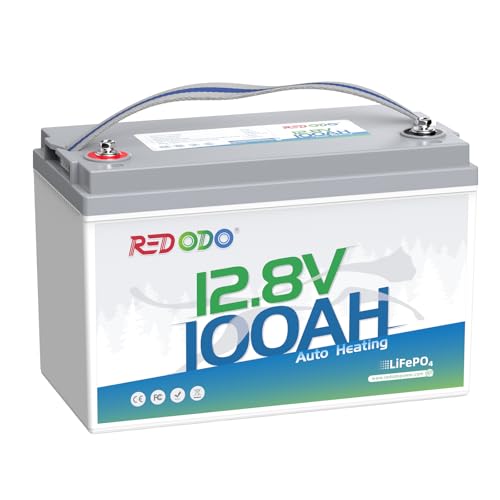
Redodo 12V 100Ah Self-Heating LiFePO4
$269.99The lower-cost self-heating option, and self-heating is the one lithium feature that is genuinely not optional in a freezing climate.
Best for: A first cold-weather lithium battery.
Check price on AmazonWhat happens if the battery runs low overnight while the CPAP is running?
Most CPAP machines simply shut off when their power source drops below the voltage the machine requires, with no cushion beyond a possible low-battery warning on the machine's own display if it has one. A battery monitor with a low state of charge alarm gives an earlier warning than waiting for the CPAP itself to shut off, and for anyone who depends on CPAP therapy every night, that early warning is worth building into the setup deliberately rather than discovering the battery was low only after therapy already stopped partway through the night.
How does CPAP power fit into the rest of the daily energy budget?
Add the CPAP's nightly amp-hour figure, taken from the table above and adjusted for your specific humidifier setting, into the same daily energy budget that covers lighting, the water pump and every other load in the rig, using the daily energy budget calculator. Treating the CPAP as a separate, unbudgeted load is how a bank that looks adequate on paper for everything else still runs low overnight, since the CPAP draws power every single night without exception in a way that some other loads do not.
What should I confirm with my CPAP equipment supplier before relying on this?
A CPAP is a medical device for most users who rely on one, and the manufacturer's own documentation is the authority on what your specific machine requires, not a general guide. Confirm whether your machine and humidifier accept 12V DC power directly, what cable or adapter the manufacturer sells for that purpose, and what happens to the machine's settings or alarms if power is interrupted mid-use. Keep a backup power plan, a second small battery, a vehicle's cigarette lighter outlet, or a plan to plug into shore power or a generator, for any night where the primary battery setup might not be enough. Traveling with a printed or saved copy of the machine's power specifications also helps if you ever need to explain the setup to someone else, such as a park host or a fellow camper helping troubleshoot a power problem.
What is the most common mistake in a CPAP power setup?
Sizing the battery around the CPAP's running watts without a humidifier, then adding heated humidification later without resizing the bank, is the most common gap in a CPAP power setup. The humidifier and heated hose can more than double the running watts, which more than doubles the nightly amp-hour draw as well, so a bank that comfortably covered several nights of CPAP-only use can fall well short once heated humidification is added. Recheck the bank size specifically after any change to the humidifier setting or hose configuration, rather than assuming the original sizing still applies.
Should I use a dedicated travel battery or the rig's house bank?
A small dedicated battery built and marketed specifically for CPAP travel use is a reasonable choice for a single traveler who wants a simple, self-contained setup, since it is sized and often labeled around common CPAP nightly draw figures. Using the rig's main house bank works just as well and avoids managing a second, separate battery, but only if the sizing genuinely accounts for the CPAP as its own line item in the daily energy budget rather than assuming it fits into whatever headroom happens to be left over from other loads. Either approach is workable; the mistake is treating the CPAP as an afterthought in either one, since it is one of the few loads in the rig that runs every night without exception. A dedicated battery also travels well outside the rig itself, which matters for anyone who occasionally sleeps away from the RV on the same trip, a tent site or a friend's guest room, and still needs the same nightly power planning to apply.
A CPAP is a medical device for many users. Confirm your machine's power requirements, DC compatibility and any humidifier limitations with your equipment supplier before relying on a battery-only setup, and keep a backup power plan for any night the primary battery might not be enough.
What to buy to run a CPAP off grid
Buy a shunt monitor first regardless of anything else, since it is the only way to confirm your specific machine's real draw. A dedicated battery sized for several nights, run on 12V DC where the machine supports it, is the setup that needs the least ongoing attention.
Redodo 12V 100Ah Self-Heating LiFePO4
$269.99100Ah covers multiple nights of CPAP use at the amp-hour figures in this guide, and self-heating cells keep charging normally in cold weather.
Best for: A first cold-weather lithium battery.
Check price on Amazon
AILI TR16 Shunt Battery Monitor
$42.00A true shunt-based monitor at a low price, which is the only accurate way to confirm your specific CPAP and humidifier's real amp-hour draw against the estimate in this guide.
Best for: A first real state of charge readout.
Check price on Amazon
Renogy P2 1000W Pure Sine Inverter
$175.99Covers a CPAP with heated humidifier's modest running watts with room to spare, for machines or humidifiers that require AC power.
Best for: Running a residential fridge or a microwave on a modest bank.
Check price on Amazon
Yeagulch 12V 200Ah LiFePO4
$316.59200Ah covers several nights of CPAP use on its own with room left over for lighting and other small overnight loads.
Best for: A single-battery bank that has to run a 2000W inverter.
Check price on AmazonFrequently asked questions
- How many watts does a CPAP machine use?
- Roughly 40 watts for the CPAP blower alone. Adding a heated humidifier and heated hose can more than double that to around 90 watts, since the heating elements draw meaningfully more than the blower motor itself. Check your own machine's nameplate, since individual models and humidifier settings vary.
- Should I run my CPAP on 12V DC or through an inverter?
- On 12V DC directly where your machine supports it, using the manufacturer's own DC power cord. It avoids both the inverter's conversion losses and its continuous idle draw, which together are the single biggest power-saving decision available for a CPAP setup. Check whether your specific humidifier heater also supports DC, since some require AC even when the CPAP blower runs on DC.
- How many amp-hours does a CPAP use overnight?
- Roughly 31 amp-hours for an eight hour night through an inverter with no humidifier, or up to about 70 amp-hours through an inverter with a heated humidifier running the full night. Running the same configurations on direct 12V DC, where the machine supports it, draws meaningfully less than either inverter figure.
- What size battery do I need to run a CPAP for several nights of boondocking?
- At the higher inverter-fed figure of about 70 amp-hours a night with a heated humidifier, three nights need roughly 264 amp-hours nominal at an 80 percent lithium depth of discharge, and four nights need roughly 352. Without a humidifier, three nights need roughly 117 amp-hours through an inverter, less on direct DC.
- Is it safe to rely on a battery alone to power a CPAP overnight?
- It can be, with a bank sized correctly for your specific machine's configuration and a backup plan in place, but a CPAP is a medical device for many users and this guide cannot substitute for your equipment supplier's own guidance. Confirm your machine's requirements directly, and keep a backup power source available for any night the primary setup might not cover.
- Does a CPAP need its own separate battery from the rest of the RV?
- It does not strictly need one, but a dedicated battery guarantees CPAP power regardless of what other loads draw down the main house bank during the day, and it simplifies sizing since the CPAP's nightly draw is not competing with lighting, water pumps and everything else for the same capacity.
A word on safety. A CPAP is a medical device for many users. Confirm your machine's power requirements and DC compatibility with your equipment supplier, size the battery for the humidifier configuration you actually use, and keep a backup power plan for any night the primary setup might not be enough.