Guides
How to Build a Real Boondocking Energy Budget, Not a Guess
Researched from published standards and manufacturer specifications. Updated .
Quick answer
Every battery bank and solar array sizing decision on this site starts from one number: how many amp-hours the rig actually uses in a day away from shore power. Get that number wrong and every calculation built on top of it, battery bank size, solar array size, run time, is wrong by the same margin. The single biggest mistake in boondocking planning is skipping this step and guessing at a bank size instead, usually by copying whatever size a forum post recommended for a completely different set of loads.
This guide walks through building the number properly: measuring or estimating amps and hours for every load, converting AC loads to DC amp-hours correctly, and accounting for the duty cycles that make real usage lower than a running-watts total would suggest. Once you have a daily amp-hour number, the battery bank calculator and the solar array calculator on this site turn it directly into a bank size and an array size, the subject of the next guide in this pair.
How do you actually calculate a daily energy budget instead of guessing?
Building a real budget means listing every load that runs off the battery in a typical day, then multiplying its amps by the hours it actually runs, not the hours it is merely turned on. A 12V water pump drawing 6 amps that runs for a total of 15 minutes a day across several short bursts uses 1.5 amp-hours, not 6 amps times 24 hours. Interior lighting drawing 2.5 amps used for four hours in the evening uses 10 amp-hours. Add every load this way, from the furnace blower to a laptop charger to a CPAP machine overnight, and the sum is the daily amp-hour budget the rest of this site's calculators are built around. The daily energy budget calculator does this same arithmetic once you have the amps and hours for each load, which is faster than a spreadsheet once the list is built, but building the list by hand once is what teaches you which loads actually matter.
Why can't I just add up running watts for 24 hours?
Because almost nothing in an RV runs continuously at its full running wattage. A 12V compressor fridge rated at 45 running watts might only run its compressor about a third of the day, cycling on and off to hold temperature, so its real daily draw is closer to a third of what a naive 24-hour calculation would suggest. A furnace blower only runs while the thermostat calls for heat, not all night. Even lighting is rarely on for a full 24 hours. Treating a nameplate running wattage as a constant, all-day draw is the single most common reason a paper budget comes in far higher than what a shunt monitor actually measures over a real trip. The fix is not a different formula, it is honesty about actual hours of use, which is exactly what a few days of shunt monitor data gives you that a nameplate rating cannot.
How do AC loads convert into the same amp-hour budget?
Every AC load run off an inverter has to be converted to DC amp-hours before it belongs in the same budget as the 12V loads, and skipping the inverter's efficiency loss in that conversion is a common error. The conversion is watts divided by inverter efficiency divided by system voltage: a 1,000 watt AC load through an inverter running at a typical 85 percent efficiency pulls about 98 amps from a 12V bank, not the 83 amps a naive watts-over-volts calculation would suggest. That gap compounds fast on anything run for multiple hours, like a residential fridge's compressor cycles or a CPAP with a heated humidifier. The inverter sizing calculator on this site applies this same conversion when sizing the inverter itself, and the same math belongs in the daily budget for any load that passes through it.
What does a real load worksheet look like?
A worked example makes the duty-cycle point concrete. The figures below use the published typical draws from the appliance power draw reference on this site, with duty cycles applied to loads that cycle rather than run continuously, which is what separates a real budget from a running-watts total.
| Load | Typical draw | Actual daily use | Amp-hours per day |
|---|---|---|---|
| 12V compressor fridge | 45W running (~3.8A at 12V) | ~8 hours of actual compressor run time | ~30 Ah |
| LED interior lighting, whole rig | 30W (~2.5A) | 4 hours | 10 Ah |
| Water pump | 60W (~5A) | 20 minutes total | ~1.7 Ah |
| Furnace blower | 100W (~8.3A) | 2 hours of burner cycles | ~16.6 Ah |
| CPAP, no humidifier | 40W (~3.3A) | 8 hours overnight | ~26.4 Ah |
| Laptop | 60W (~5A) | 3 hours | 15 Ah |
Convention Source: Appliance draws from the RV appliance power draw reference on this site; duty cycles are illustrative planning assumptions, not measured figures for a specific rig.. Actual duty cycles vary by rig, insulation, ambient temperature and how loads are used. Confirm your own numbers with a shunt monitor over a few real days before finalizing a bank size.
What do you do with the daily number once you have it?
Once you have a daily amp-hour figure, it becomes the input to two more calculations, not the final answer by itself. Multiply it by the number of days you want to camp without recharging, apply a depth of discharge convention for your battery chemistry, and the battery bank calculator turns that into a nominal bank size, covered in full in the battery bank sizing guide below. Separately, dividing the same daily figure by your local peak sun hours and a system loss convention gives a solar array size on the solar array calculator, and dividing a nominal bank by a steady draw gives an estimated run time on the battery run time calculator. All three calculators start from the same number built in this guide, which is why getting the daily figure right matters more than which formula you apply to it afterward.
Does the budget change with the seasons?
Yes, and heating is usually the biggest swing. A furnace blower alone adds a moderate draw, but running electric space heaters instead of propane heat multiplies the daily budget several times over, since a space heater on its low setting alone draws close to what an entire evening of lighting uses. Cold weather also increases fridge compressor run time and can add a self-heating lithium battery's own internal heating draw if the pack is charging near freezing. Building one budget for typical weather and a second, higher budget for cold-weather camping avoids the surprise of a bank that worked fine in warm weather coming up short on a cold week. The propane versus electric heat calculator on this site is the fastest way to check whether a specific heating choice belongs in the electric budget at all or is better left on propane.
What is the single biggest mistake in a boondocking energy budget?
Sizing the budget around what a rig could theoretically draw at once, rather than what it actually draws across a full day. A rig with a residential fridge, a CPAP, an inverter and full lighting could theoretically draw well over 20 amps simultaneously for a moment, but almost never does so for more than a few minutes at a time. Basing a battery bank on that theoretical peak instead of the measured daily total produces a bank two or three times larger, and more expensive, than the actual usage requires. The corrective is the same one used throughout this guide: measure amps and hours per load, apply real duty cycles, and let a shunt monitor confirm the total over a few real days before committing to a bank size the theoretical peak would have oversized.
Do not budget a life-support device by feel. A CPAP or other medical device should get its own confirmed measurement, including any heated humidifier, and a comfortable margin above the calculated daily total rather than a number trimmed to the minimum.
What to buy to measure the real number
A calculator can size a bank from a number you supply, but only a shunt monitor tells you whether that number was right after a few real days off grid. Buying one before or right after a boondocking trip turns next season's budget from a guess into a measurement.

AILI TR16 Shunt Battery Monitor
$42.00Counts amp-hours directly rather than estimating from running watts, for well under the price of the other monitors here.
Best for: A first real state of charge readout.
Check price on Amazon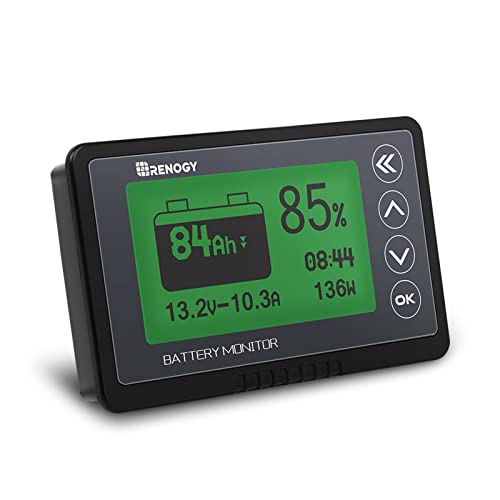
Renogy 500A Battery Monitor with Shunt
$63.10A straightforward amp-hour counter with a dedicated display, no phone app required to read the daily total.
Best for: A panel-mounted readout.
Check price on Amazon
LiTime 500A Bluetooth Battery Monitor
$109.99Bluetooth history makes it easier to compare several days of actual draw against the paper budget below.
Best for: A build that may change system voltage later.
Check price on Amazon
Victron SmartShunt 500A Battery Monitor
Price varies, check the listingDetailed app history and alarms, for a build where the budget needs to be verified precisely across a full boondocking week.
Best for: Any lithium bank you plan to boondock on.
Check price on AmazonFrequently asked questions
- How many amp-hours does a typical boondocking rig use per day?
- It varies enormously by rig and habits, commonly somewhere between 30 and 100 amp-hours a day for a rig without a residential fridge or air conditioner running off the battery, and well above that with either. There is no single typical number worth planning around; build your own total from your actual loads and hours using the method in this guide rather than borrowing a stranger's figure.
- Why does my fridge use fewer amp-hours than its running wattage suggests?
- Because a compressor fridge cycles on and off to hold temperature rather than running continuously, so its actual daily draw is its running amps multiplied by however many hours the compressor is actually on, not by 24. A fridge running about a third of the day uses roughly a third of what a naive full-day calculation would suggest.
- Do I need to include the inverter's own efficiency loss in my budget?
- Yes, for any load that passes through the inverter. Dividing AC watts by system voltage alone understates the real DC draw, since a typical inverter running at around 85 percent efficiency loses some power as heat in the conversion. That loss adds up fast on anything run for hours, so include it rather than rounding it away.
- Should I budget for the worst day or an average day?
- Budget for a day on the higher end of normal use rather than either the theoretical peak or the lightest day you can imagine. A bank sized to the absolute peak simultaneous draw is oversized and expensive; a bank sized to your lightest day runs short the first time weather or a guest changes your normal pattern.
- How do I measure my actual daily amp-hours instead of estimating?
- A shunt-based battery monitor, installed on the negative side of the battery, counts every amp-hour in and out and totals it over a day automatically. Running one for several representative days, including at least one cold or heavy-use day, gives a measured number that is more reliable than any hand-built estimate, and is worth doing before finalizing a bank size.
- Does a bigger battery bank mean I do not need to bother with a daily budget?
- No. Even a large bank eventually needs recharging, and the daily budget is what decides how fast it drains and how much solar or alternator charging is needed to keep up. Skipping the budget just delays the point where an undersized charging source, not the battery, becomes the actual limit.
Measure before you size. A daily amp-hour budget built from real loads and honest duty cycles is worth more than any single rule of thumb for a battery bank or solar array. Confirm it with a shunt monitor over a few real days before committing to a final size.